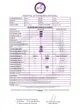
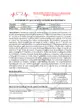
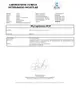
Peripheral blood: average of 4–5 platelets per field at 100x across 20 fields.
Reticulocytes by vital staining: 1.4 %; corrected: 1.0; reticulocyte production index: 0.67. Buffy coat 1 %; plasma solids 7.1 g/dL; normal plasma color. Negative saline autoagglutination and positive osmotic fragility.
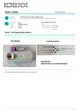
Peripheral cytology: anisocytosis +, polychromasia +, echinocytes + and codocytes +. White cell series estimated as normal at 40x, without an absolute count. Platelets with anisocytosis + and macroplatelets +. No blasts, dysplastic changes or inclusions associated with blood parasites are observed.
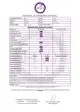
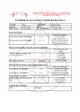
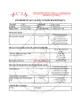
Bone marrow obtained from the proximal epiphysis of the humerus and the sternum. At 10x: few spicules and 4 megakaryocytes per field. At 40x: the checked box is Normocellular. The scarcity of spicules is retained as an observation from the report, without replacing the marked classification.
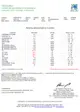
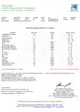
Bone marrow differential: erythroid series 41.1 % and myeloid series 57.9 %; M/E ratio 1.40 (reference 0.75–2.53). Bone marrow neutrophils: myelocytes 3.2 %, metamyelocytes 6.2 %, bands 19 % and mature cells 22 %. These are bone marrow percentages, not absolute counts in peripheral blood.
The bone marrow differential lists megakaryocytes at 0 %; this uses a different denominator from the 4 megakaryocytes per field in the 10x assessment. The author describes red and myeloid cell lines with appropriate maturation, a normal M/E ratio and no infectious agents identified in the sample.
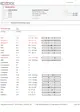
The conclusion states “moderate anemia”, while the table in the same report places a hematocrit of 30–37 % in the mild category. The result of 32.43 % and the author's conclusion are retained without treating the two classifications as equivalent.
Instructions
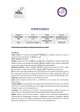
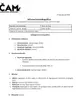
Recorded regimen: iron dextran in three weeks; weekly cyanocobalamin for four weeks; doxycycline until completion of 28 days and prednisone 20 mg, one tablet daily, until 5 October. This is recorded as an instruction in the report, not as confirmation of administration.
Complete blood counts requested for 23 and 27 September and 1 October. The report makes HEPTA and filgrastim conditional on a deterioration in the condition; it does not document their initiation. Hematology follow-up requested for 3 October.
The cyanocobalamin regimen written in this report is for four weeks; the previous timeline recorded three weeks. The difference between sources is retained.
The header has a different name and date; the report was confirmed to belong to Emma and to correspond to 21 September 2026.